Tired, aching legs and visible veins can hold you back from living comfortably and feeling confident. Varicose veins affect millions of adults across the country. Fortunately, modern treatments offer real, lasting solutions.
For many people, the first concern is cosmetic. These large, bulging, twisted veins tend to show up on the legs and can have a noticeable impact on how you feel about your appearance. But there is more going on beneath the surface. Varicose veins are a window into your vascular health, and while they are not always life-threatening, the providers at Third Coast Vascular want you to understand that varicose veins can develop into a serious condition if left unaddressed.
Our team of interventional radiologists, wound care experts, and interventional vascular specialists brings extensive experience to every patient. We build individualized treatment plans and use innovative therapies for non-healing wounds and a full range of vascular conditions.
Are Varicose Veins Dangerous?
Most of the time, no. For the majority of patients, varicose veins do not pose an immediate threat to life and will not cause lasting organ damage on their own.
But that does not mean they should be brushed off. Varicose veins are a sign that blood is not moving through your legs the way it should. Over months and years, the pooling blood and the pressure it creates can lead to real discomfort and, in some cases, serious medical complications. A condition that starts as a cosmetic nuisance can quietly progress into chronic venous insufficiency or set the stage for blood clots. The key is knowing what to watch for.
Why Do Varicose Veins Form?
Your veins rely on tiny one-way valves to push blood upward toward the heart. In the legs, those valves are fighting gravity with every beat. When they weaken or fail, blood slides backward and begins to pool in the lower leg. That pooling creates pressure. The pressure stretches the vein wall outward. And because veins are thin-walled structures without the muscular support that arteries have, they distend quickly, producing the twisted, rope-like appearance that is so recognizable.
What Happens When Varicose Veins Are Left Untreated?
The short answer: things get worse. The longer answer involves a slow cascade of changes that can become genuinely difficult to reverse.
As blood continues to pool, fluid seeps out of the damaged veins and into the soft tissues of the lower leg. The leg swells. The skin thickens. Over time, a brownish discoloration often appears around the ankles, which is actually iron from red blood cells leaking into the skin. It is one of the more telling signs that venous disease has been progressing quietly for a while.
Can Untreated Varicose Veins Cause Skin Ulcers?
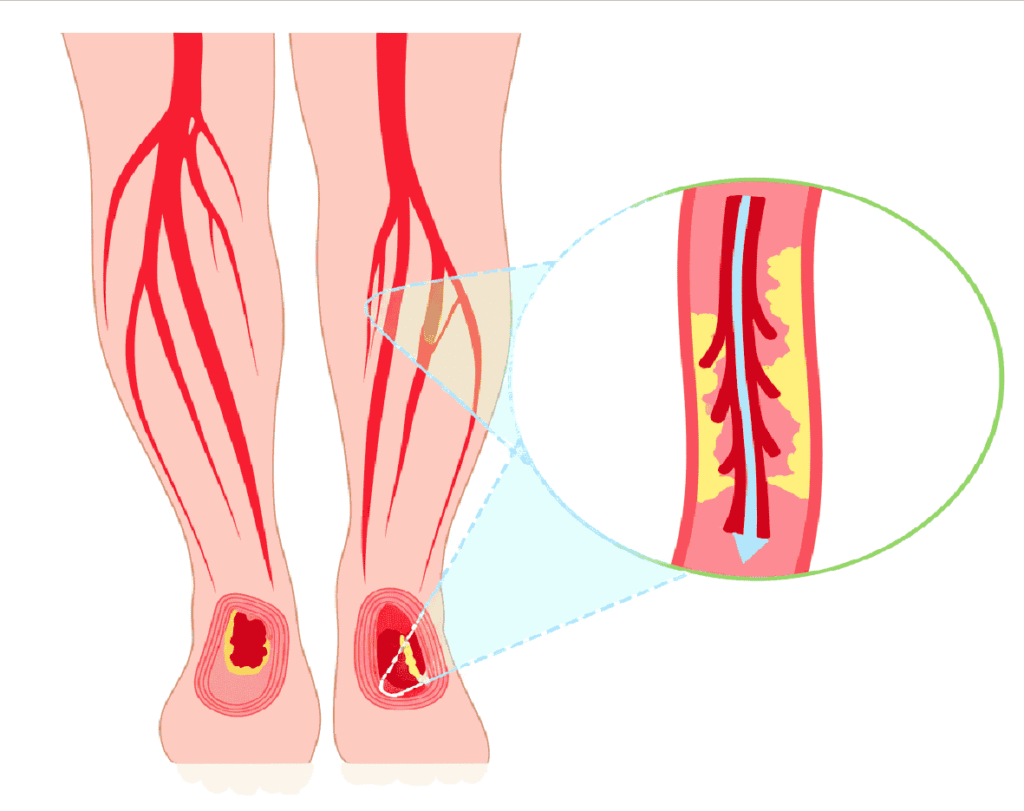
Yes. When circulation in the lower leg is severely compromised, the skin loses its ability to heal even minor injuries. Painful open sores called venous ulcers can develop, most often just above the ankle. These wounds are notoriously stubborn. They resist standard wound care, become infected easily, and can take months to close with proper treatment. Left alone, they rarely heal on their own.
Potential Health Risks and Complications
There is a spectrum to varicose vein disease. On one end, you have mild cosmetic concerns. On the other, you have complications that require urgent medical attention. The three most important risks to understand are superficial thrombophlebitis, deep vein thrombosis, and pulmonary embolism.
Superficial Thrombophlebitis
When blood pools and moves sluggishly inside a varicose vein, it can clot. A clot that forms close to the skin surface is called superficial thrombophlebitis. The affected area turns red and warm. The vein itself often feels like a hard, tender cord running under the skin. It is painful and alarming, but in most cases it is treatable and not immediately life-threatening.
Deep Vein Thrombosis (DVT)
The situation becomes significantly more serious when a clot forms in one of the deeper veins of the leg. Deep vein thrombosis does not always cause obvious symptoms, which is part of what makes it dangerous. Swelling, warmth, and a dull ache in the calf are common signs, but some people feel nothing at all. Having varicose veins does not guarantee you will develop DVT, but the impaired circulation associated with venous insufficiency does raise the risk.
Pulmonary Embolism
This is where things can become life-threatening. If a DVT clot breaks loose, it can travel through the bloodstream and become lodged in the arteries of the lungs. That is a pulmonary embolism. Sudden shortness of breath, chest pain, and a rapid heart rate are the hallmark symptoms. It requires emergency treatment. While the chain of events from varicose veins to pulmonary embolism is not common, it is a real pathway, and it is one of the primary reasons vascular specialists encourage patients not to ignore progressive symptoms.
Warning Signs: When to Worry About Your Varicose Veins
Most varicose veins can be monitored and managed without urgency. But there are specific symptoms that should prompt you to call a specialist sooner rather than later:
- Sudden or worsening pain that does not improve with rest or elevation
- One leg swelling significantly more than the other, which can indicate a clot
- Skin that feels hot and looks red directly over a vein
- A hard lump developing under the skin along a vein
- Bleeding from a vein that is close to the surface, even from minor contact
- An open sore or wound near the ankle that is not healing
Do not wait these out. A vascular ultrasound can identify what is happening inside the vein within minutes, and early intervention almost always leads to better outcomes.
Who Is at Risk for Varicose Veins?
Genetics is the single biggest driver. If both of your parents had varicose veins, your odds of developing them are very high. Beyond family history, a number of other factors increase your risk:
- Jobs that require prolonged standing or sitting, such as nursing, retail, or office work
- Pregnancy, which increases blood volume and puts pressure on the pelvic veins
- A personal history of blood clots
- Increasing age, as vein walls naturally lose elasticity over time
- Excess body weight, which adds pressure to the venous system
Hormones also play a meaningful role. Women are more likely to develop varicose veins than men, largely because estrogen affects the tone of vein walls. Hormonal changes during pregnancy and menopause are particularly significant contributing factors.
Relieving Symptoms at Home
Some patients with varicose veins have no symptoms at all. Others deal with a persistent heavy, tired feeling in the legs, cramping, itching, or swelling that gets worse as the day goes on. Evening is typically when symptoms peak, after hours of gravity working against your circulation.
Conservative measures will not eliminate varicose veins, but they can meaningfully reduce discomfort. Elevating your legs above the level of your heart for short periods throughout the day takes pressure off the veins. Compression stockings, worn from morning to evening, squeeze the leg gently and help push blood upward. Walking is one of the most effective tools available because the calf muscle acts as a pump, actively driving blood back toward the heart with every step.
Treatment Options for Varicose Veins
When conservative care is not enough, Third Coast Vascular offers a full range of varicose vein treatment options built around your specific anatomy and symptoms.
The process starts with a diagnostic ultrasound. This allows our specialists to map the venous system, identify which valves have failed, and determine the best course of action. From there, treatment is typically minimally invasive and performed right in our office. Sclerotherapy uses a chemical solution injected directly into the vein to cause it to scar and close. Laser therapy and endovenous ablation use heat energy to achieve the same result. Once a problematic vein is closed off, blood naturally reroutes itself through healthier vessels nearby, and circulation improves.
Recovery is straightforward. Most patients walk out of the office the same day and return to normal activity within a day or two.
Exceptional Vein Care in the Midwest
The team at Third Coast Vascular takes vein health seriously. Our board-certified vascular specialists treat the full spectrum of venous conditions, from spider veins and varicose veins to complex venous disorders and non-healing wounds. Every treatment plan is individualized, because no two patients present the same way.
Whether your main concern is how your legs look or you are dealing with pain that affects your daily life, we are here to help. If you have noticed any of the warning signs described above, or if you simply want to know where you stand, schedule a consultation with our team today.